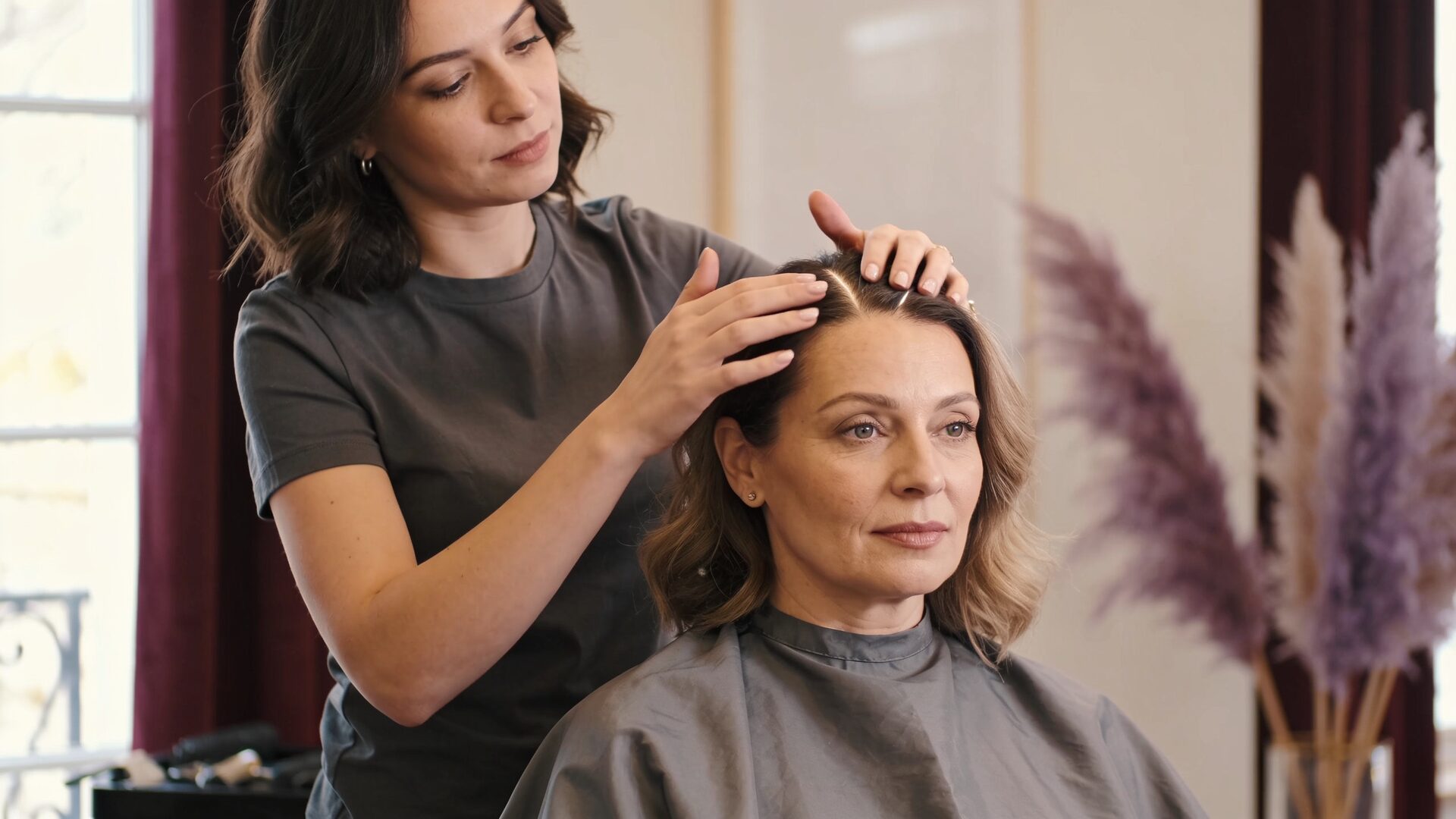
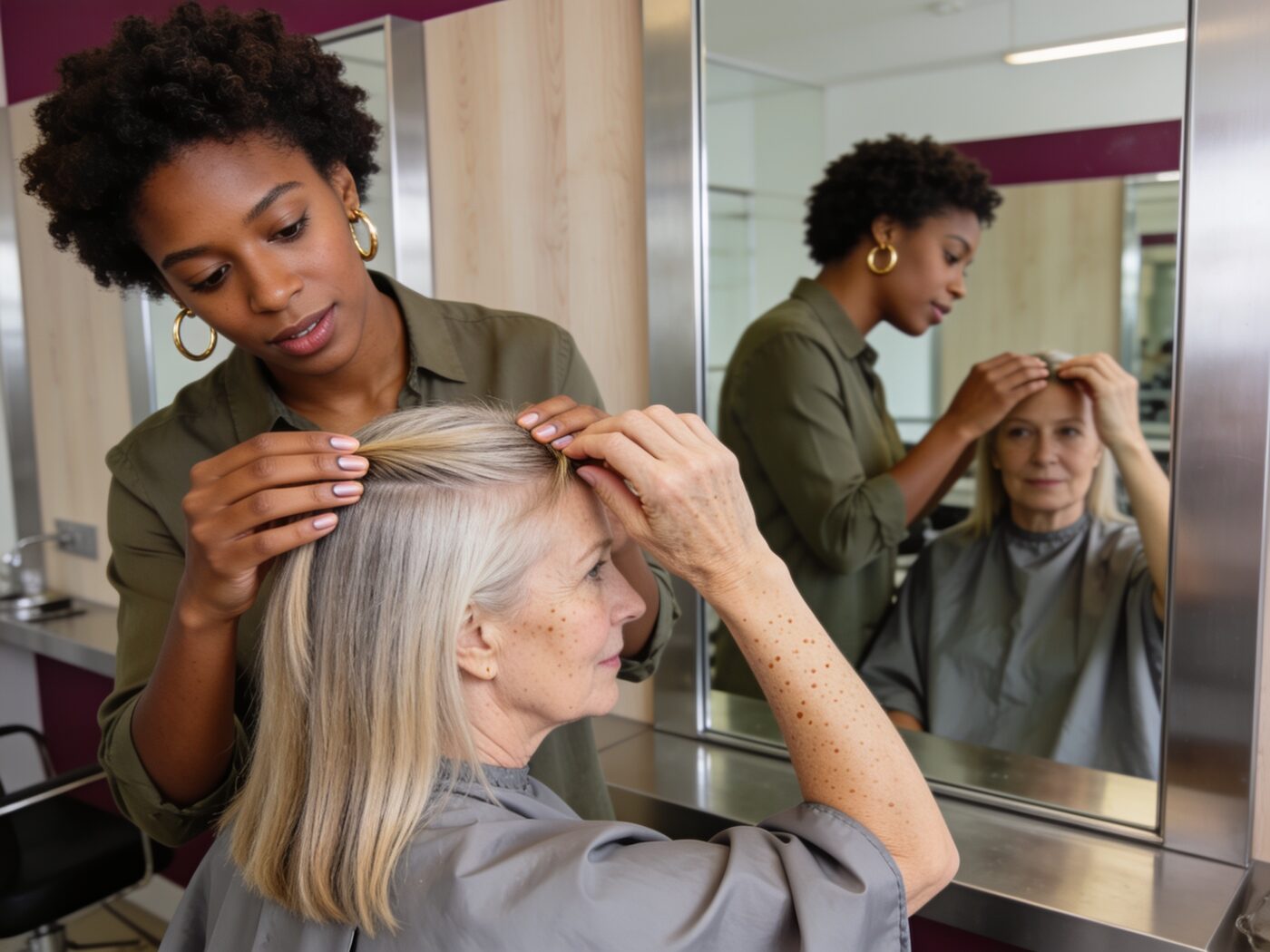
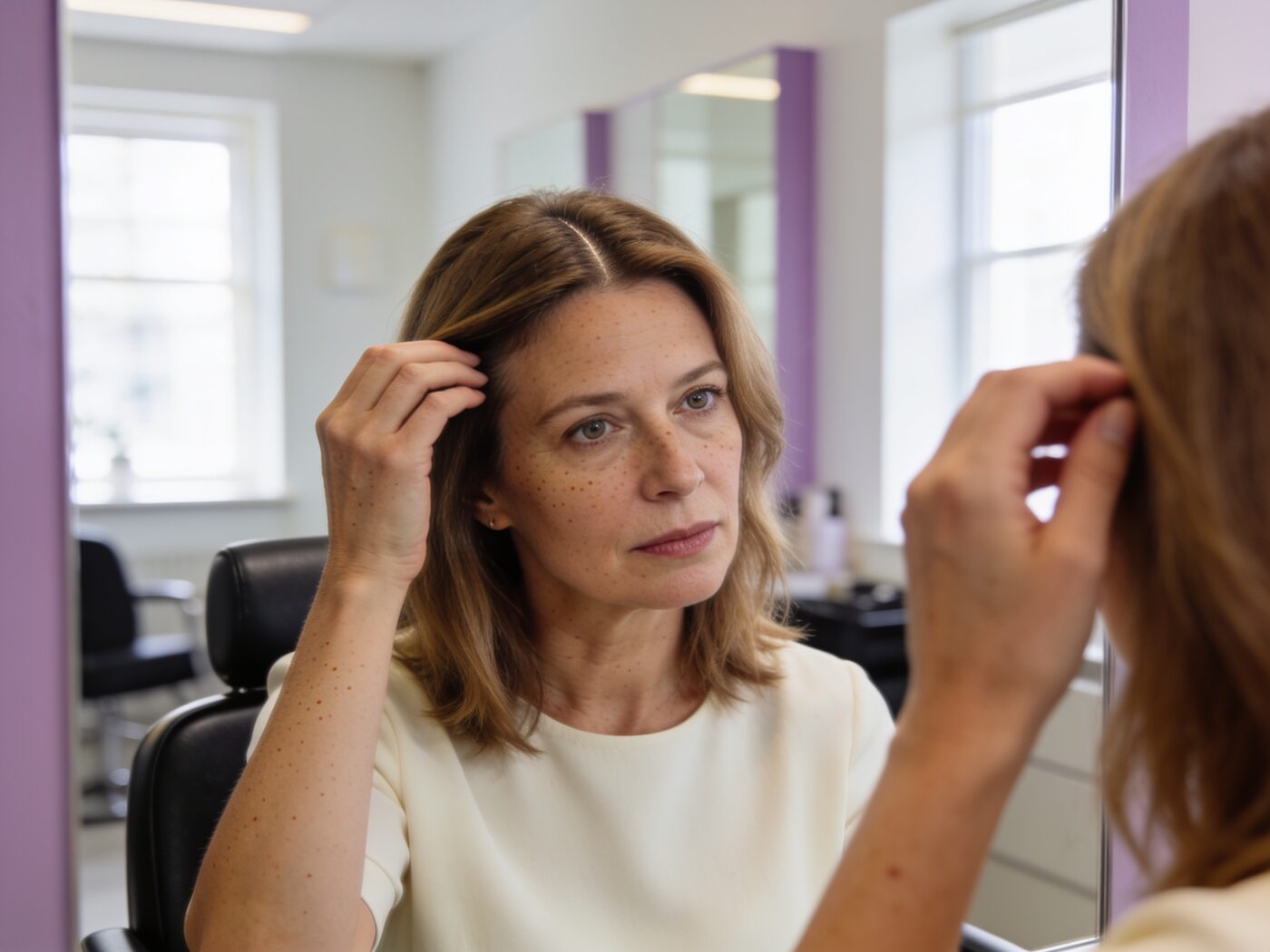
The hair conversation is already happening in your chair.
Eighty million Americans are losing their hair, and their stylist sees it first. Offer a physician-led hair program under your own brand, without hiring a clinician or touching a prescription.
Sources: American Academy of Dermatology; hair loss telehealth market research, 2026.
You have heard all of these
The six sentences that end in nothing
Every one of these is a client telling you they want help. Until now the honest answer was a volumising shampoo and a sympathetic face.
“My part is getting wider”“I'm seeing more scalp in photos”“There's more hair in the shower drain”“It started after I lost the weight”“My mum's hair went the same way”“I've been looking at those online sites”
A widening part, a thinning crown, more hair in the brush. Stylists notice months before a client books a doctor, and years before most clients admit it out loud. Right now that observation goes nowhere.
Every six weeks, on trust
A salon has the rarest asset in health and beauty: a high-frequency, high-trust relationship. Clients tell their stylist things they tell no one else. Hair loss is at the top of that list.
The spend is already leaving
Hair loss telehealth is growing 22% a year and one company built 2.5 million subscribers starting from exactly this category. Your clients are buying it from strangers online because you had nothing to offer.
A program, not a product
Retail sells once. A hair program is a monthly prescription that renews on its own, at a retail price you set, on top of the service revenue you already earn from the same client.
Hair first, then everything next to it
The programs your clients already talk about, prescribed only where an independent clinician decides they are appropriate.
Thirty million American women have androgenetic alopecia, and the part line widening is usually noticed in your chair long before a doctor's office. Topical minoxidil is the only FDA-approved treatment for female pattern hair loss; the rest are prescribed off-label at a clinician's judgement.
Hair loss, for men
Finasteride, topical finasteride, topical and low-dose oral minoxidil
Fifty million American men, and the ones sitting in your chair are already pricing this on an online-only website. Combination therapy is the current standard of care, and it is a monthly program rather than a one-time purchase.
Shedding after rapid weight loss
Clinician-guided support for telogen effluvium
A BMJ study published in July 2026 linked GLP-1 medications to a modest but real increase in hair loss risk, driven by rapid weight change rather than the drug itself. Your clients are on these medications now, and the shedding lands on your floor first.
Scalp and skin health
Prescription scalp topicals and antifungal treatments
Scalp treatments are the fastest-growing service on the salon menu. Where a scalp condition needs a prescription, it goes to a clinician instead of ending the conversation.
Menopause and hormone health
Estradiol, micronized progesterone and related therapies
Hair thinning is often the first symptom a woman mentions out loud, and most never get treated for the rest of it. Seventy-three percent of women with menopause symptoms go untreated.
Medical weight loss
GLP-1 therapy, semaglutide and tirzepatide
The program your clients ask about everywhere else. Offering it under your brand keeps the spend, and the conversation about what it does to their hair, with you.
Vitality support
Vitamin B12 and NAD+
Energy and nutritional support alongside the core programs, where a clinician considers it appropriate.
Female pattern hair loss is common, treatable and badly served. Women get told it is stress, or hormones, or nothing at all. Topical minoxidil is the only FDA-approved option for them, while the treatments clinicians actually reach for are prescribed off-label and are hard to get without a real consultation.
Meanwhile the same woman is often on a GLP-1, and a BMJ study published in July 2026 tied those medications to a modest increase in hair shedding. She is going to notice. She is going to mention it to you.
Your team mentions the program the way they mention a bond treatment. Scripted introduction only, no diagnosing, no advice. You are the seller of record and set your own price.
2
A clinician takes it from there
The client completes intake on your branded storefront. Independent, licensed clinicians at Beluga Health evaluate and, where appropriate, prescribe, and a state-licensed pharmacy ships to the door.
3
You keep the chair and the margin
The client keeps coming back to you for the cut and the color, and now for the program too. Local Healthcare bills as your agent and remits your share every month.
A study published in The BMJ on 22 July 2026 found a 37% higher risk of hair loss on GLP-1 medications compared with SGLT-2 inhibitors, and 68% higher compared with DPP-4 inhibitors. Absolute risk stays low, and the mechanism looks like telogen effluvium from rapid weight and nutrition change rather than the drug itself. Most cases settle once weight stabilises. Your clients are on these drugs now, and the first person they tell is their stylist.
The BMJ via ScienceDaily
Market
Hair loss telehealth is growing 22% a year
The hair loss telehealth market goes from $2.76bn in 2025 to $3.37bn in 2026, a 22.2% compound growth rate. Hims and Hers built a 2.5 million subscriber business starting from exactly this category. Every dollar of it is a client who could have bought the same program from someone they actually know.
Research and Markets
The science, Dec 2025
The first new mechanism in thirty years
Clascoterone 5% topical solution posted Phase 3 results showing a large relative improvement in hair count over placebo, and it is the first genuinely new mechanism of action in the category in three decades. Cosmo Pharmaceuticals has signalled an FDA submission in 2026. The category is about to get more, not less, interesting.
Yes, by selling a program that an independent clinician prescribes. The salon is the seller of record and sets its own price. Licensed clinicians at Beluga Health assess each client online and prescribe where appropriate. Stylists introduce the program and nothing more; they never diagnose or recommend a medication.
What hair loss medications can a clinician prescribe?
Topical minoxidil, which is the only treatment FDA approved for female pattern hair loss, and oral finasteride, which is FDA approved for men. Clinicians also use low-dose oral minoxidil, spironolactone and topical finasteride off-label at their own discretion. No result is promised and not everyone qualifies.
What does Salon Healthcare cost a salon?
Nothing to start. The only charge is $50 per treatment, per month, on active programs. No clinician to hire, no software licence, no stock to carry and no minimum, so a month with no sign-ups costs the salon nothing at all.
Your clients are already buying this. From someone else.
Launch a branded hair program in days. No clinician to hire, no software to license, no prescription to touch.