Treatments
Hair first, then everything that sits next to it.
Hair is the wedge, because it is the thing your clients raise first and worry about most. Your branded storefront can carry the full hair stack and the programs that sit next to it, each provided only where an independent, licensed clinician determines it is appropriate.
Hair loss, for women
Topical minoxidil, low-dose oral minoxidil, spironolactone, topical finasteride
Thirty million American women have androgenetic alopecia, and the part line widening is usually noticed in your chair long before a doctor's office. Topical minoxidil is the only FDA-approved treatment for female pattern hair loss; the rest are prescribed off-label at a clinician's judgement.
Hair loss, for men
Finasteride, topical finasteride, topical and low-dose oral minoxidil
Fifty million American men, and the ones sitting in your chair are already pricing this on an online-only website. Combination therapy is the current standard of care, and it is a monthly program rather than a one-time purchase.
Shedding after rapid weight loss
Clinician-guided support for telogen effluvium
A BMJ study published in July 2026 linked GLP-1 medications to a modest but real increase in hair loss risk, driven by rapid weight change rather than the drug itself. Your clients are on these medications now, and the shedding lands on your floor first.
Scalp and skin health
Prescription scalp topicals and antifungal treatments
Scalp treatments are the fastest-growing service on the salon menu. Where a scalp condition needs a prescription, it goes to a clinician instead of ending the conversation.
Menopause and hormone health
Estradiol, micronized progesterone and related therapies
Hair thinning is often the first symptom a woman mentions out loud, and most never get treated for the rest of it. Seventy-three percent of women with menopause symptoms go untreated.
Medical weight loss
GLP-1 therapy, semaglutide and tirzepatide
The program your clients ask about everywhere else. Offering it under your brand keeps the spend, and the conversation about what it does to their hair, with you.
Vitality support
Vitamin B12 and NAD+
Energy and nutritional support alongside the core programs, where a clinician considers it appropriate.
Your team never prescribes
Stylists introduce the program and nothing more. Every clinical judgement belongs to an independent licensed clinician, and every medical question goes to the care team, not your front desk.
All prescription treatments are provided solely where an independent, licensed clinician determines they are clinically appropriate after reviewing a client's health history, and not everyone qualifies. Topical minoxidil is the only treatment FDA approved for female pattern hair loss; oral minoxidil, spironolactone, finasteride and dutasteride are prescribed off-label at a clinician's discretion, and dutasteride and finasteride are not appropriate for women who could become pregnant. Compounded medications are prepared by state-licensed pharmacies and are not FDA approved, and no claim is made that they are as safe or effective as any branded alternative. No result is promised. Availability varies by state. Prices and clinical detail are shown on the storefront, not here.
Where your menu already goes
Your clients already treat the scalp as a health surface
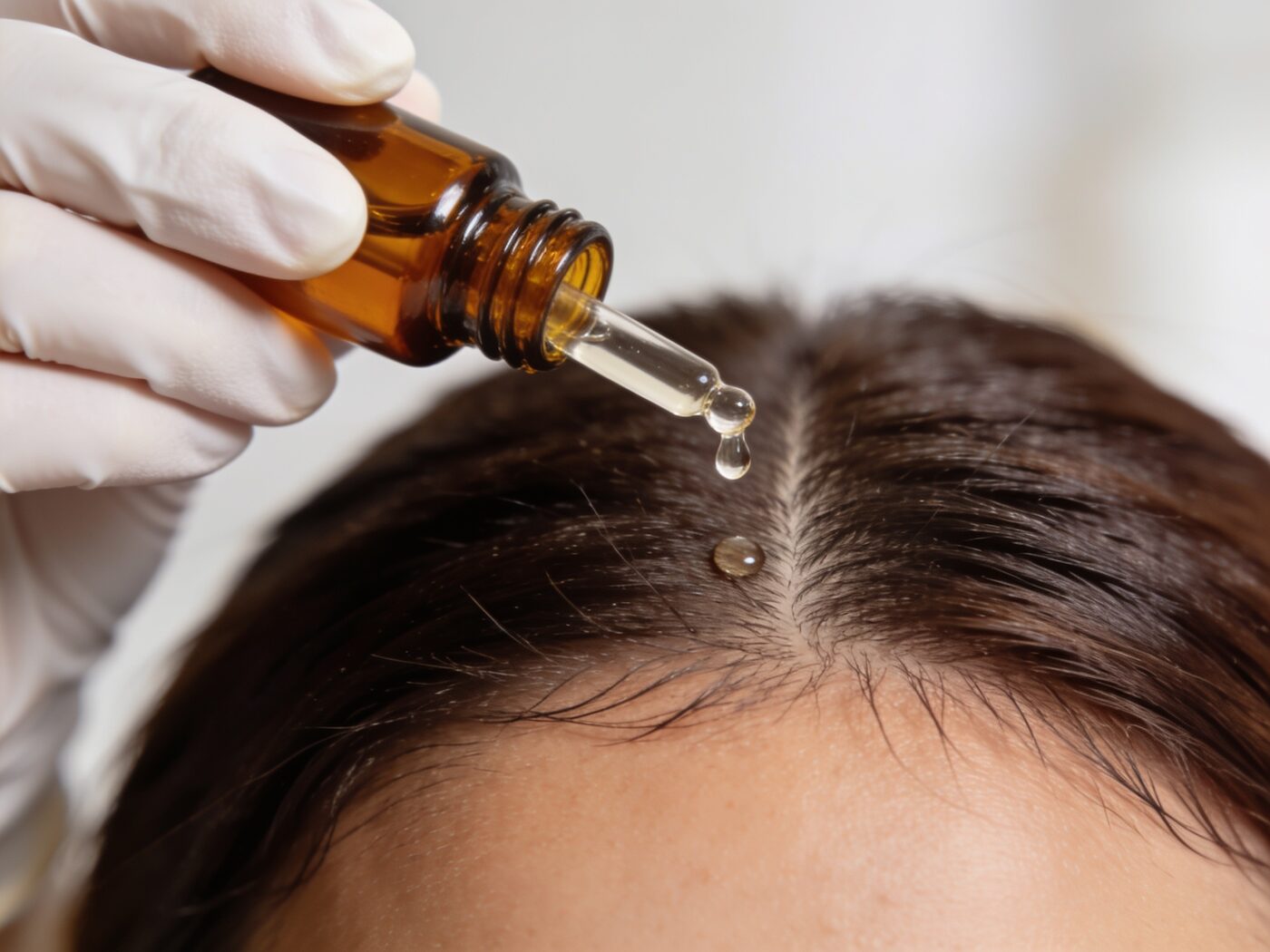
Scalp treatments grew 9% across the first three quarters of 2025 and price above the average hair treatment. Head spa went mainstream and magnified scalp analysis arrived at the chair. Clients have already accepted that what happens at the root is a health question.
The gap is what happens when the answer needs a prescription. Today that conversation stops. With a storefront it goes to a clinician instead.
Not just the salon chair
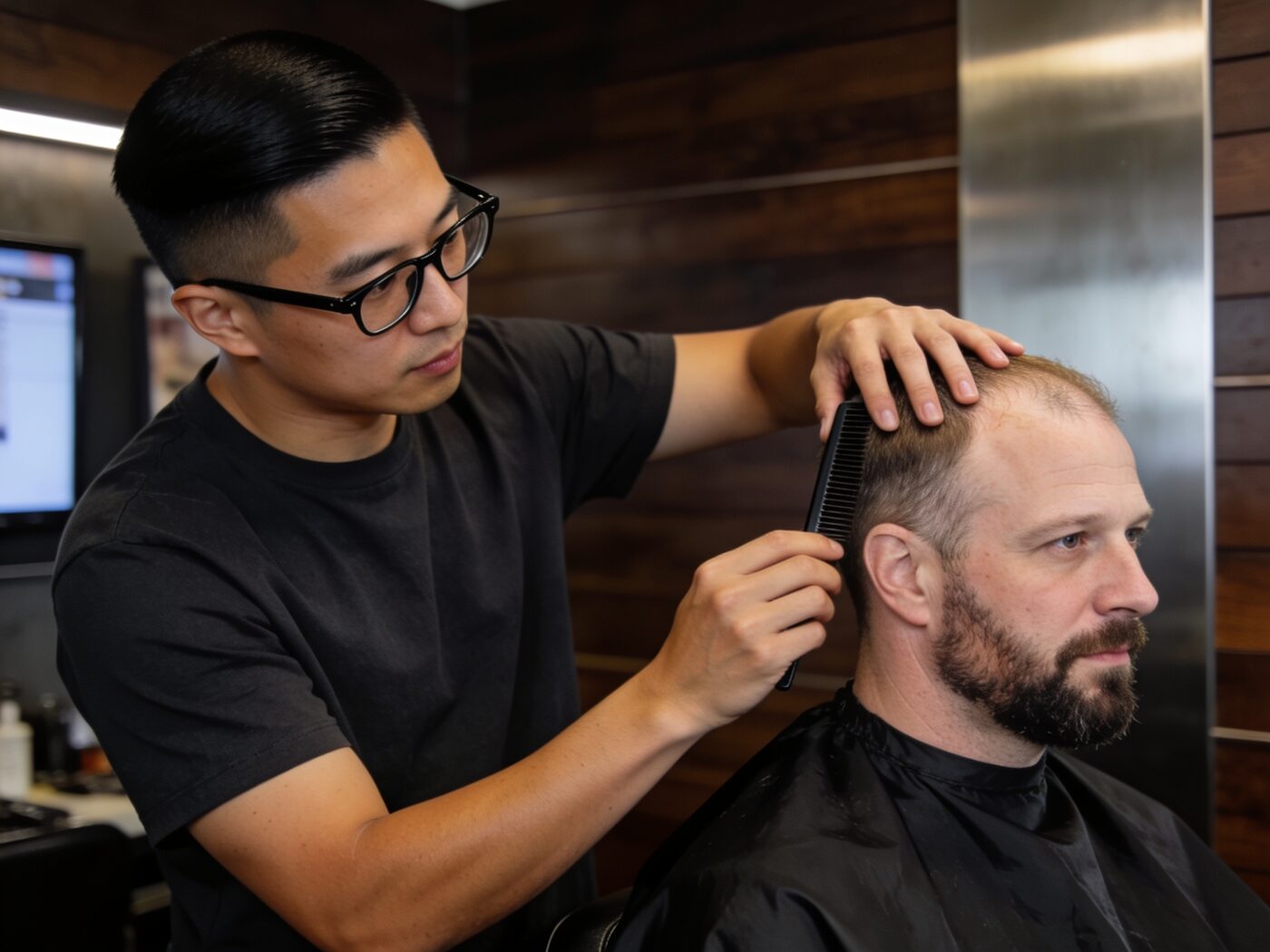
Fifty million men, and a barber who sees the crown every month
Barbers have the shortest cycle and the bluntest conversations in the industry. A client who is thinning at the crown knows it, and is usually already pricing something online at eleven at night.
Combination therapy is an ongoing monthly program rather than a one-time purchase, which is exactly the shape of a barbershop relationship.